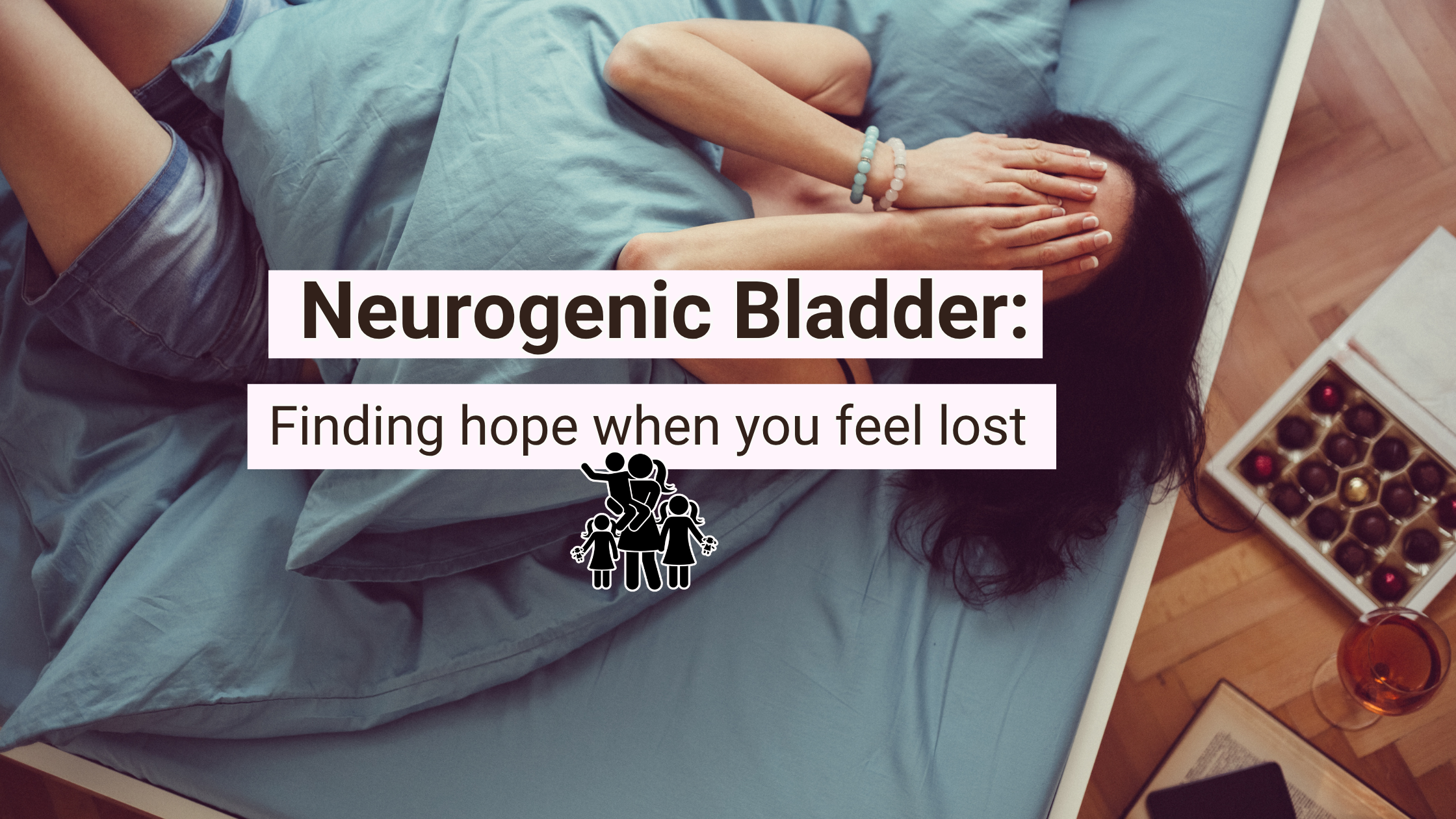
Neurogenic Bladder: Finding Hope When You Feel Lost

A neurogenic bladder diagnosis can leave you feeling lost, overwhelmed, confused, and completely unprepared for what comes next. Chances are you’ve spent hours searching for information about neurogenic bladder, underactive neurogenic bladder, urinary retention, catheterization, or living with a suprapubic catheter, trying to understand what your diagnosis means for your future. But sometimes information doesn’t answer the question you’re really asking: “How am I supposed to do this?”
If you’ve recently been diagnosed with neurogenic bladder and you’re struggling to see beyond the fear and uncertainty, I want to start with this: There can still be hope.
When the Diagnosis Changes Everything
Before your diagnosis, you may never have thought about your bladder beyond the occasional inconvenience of needing to use the bathroom. Then suddenly, you’re learning words like neurogenic bladder, urinary retention, detrusor underactivity, catheterization, bladder spasms or Supra Pubic Catheter. Learning to deal with a completely different way of life and how to talk to your urologist or nurses. And learning how to manage a catheter, or trying to understand your treatment options.
And somewhere in the middle of all of that information, you may be thinking: What happened to my life? A neurogenic bladder diagnosis isn’t simply a medical term. For many people, it means adjusting to a body that no longer functions the way it once did. And that adjustment can take time.

The Confusion After a Neurogenic Bladder Diagnosis
One of the hardest parts of a new diagnosis can be not knowing what questions to ask. You don’t know what you don’t know. And trying to find answers can be overwhelming, intimidating, and exhausting.
You may find yourself searching:
- What does neurogenic bladder mean for my daily life?
- Can an underactive neurogenic bladder improve?
- Why can’t I empty my bladder?
- Will I always need a catheter?
- What is it like to live with a supra pubic catheter?
- How do I manage my bladder now?
- What questions should I ask my urologist?
- How do I deal with the emotional side of this diagnosis?
The internet can give you medical information, but sometimes what you’re desperately looking for is someone who understands the lived experience behind the diagnosis. Someone who knows what it’s like to be scared, to feel embarrassed, and who understands the grief that can come with losing some of the independence or spontaneity you once took for granted. A friend who can say: “You’re not crazy for finding this overwhelming.”
It’s OK to Grieve the Life You Had Before
Finding hope after a neurogenic bladder diagnosis doesn’t mean pretending that nothing has changed. Because the reality is something has changed. You may need to plan around catheter changes, supplies, appointments, bladder management or other aspects of your care. Your body may look different; your routines may look different. Things that once happened automatically may now require planning.
This can be frustrating, angering and saddening. There may be days when you’re tired of thinking about your bladder at all. Those feelings don’t mean you’re failing to adjust; they mean you’re human. And you don’t have to rush through those emotions just because you have a diagnosis and a treatment plan.
Finding Hope Doesn’t Mean Knowing Everything
When I first started navigating my own underactive neurogenic bladder, I didn’t have all the answers. I had questions, a lot of them. Massive fear about what the future would look like, I had to learn things about my body that I never expected to have to learn. And I had to navigate the emotional reality of becoming someone who needed ongoing bladder management.
One of the things I wished for most was someone who could sit beside me and say:“I’ve been there.” Not necessarily someone with all the answers, just someone who understood. That is a huge part of why I created the Neurogenic Bladder: Patient-to-Patient Digital Companion Guide.
Why I Created the Neurogenic Bladder: Patient-to-Patient Digital Companion Guide
I created this guide from my own, painful, lived experience with an underactive neurogenic bladder and living with a Supra Pubic Catheter. Because I know how overwhelming it can be when you’re trying to understand your diagnosis while also trying to process what it means for your life now and in the future. I know what it’s like to search for information and still feel like something is missing.
The medical information matters, of course it does. But there is another side of a neurogenic bladder diagnosis that deserves to be talked about too. The human side: the fear, uncertainty, body changes, practical questions and emotional exhaustion. The moments where you wonder whether you’ll ever feel comfortable in your new normal, the normal you never asked for. And the hope that can eventually begin to grow alongside all of it.

What is the Patient-to-Patient Digital Companion Guide?
TheNeurogenic Bladder: Patient-to-Patient Digital Companion Guide was created to be a supportive resource for people navigating life after a neurogenic bladder diagnosis. It isn’t a replacement for your healthcare team, and it isn’t medical advice. Instead, it brings together information, personal experience, reflections, and practical considerations from the perspective of someone who has actually lived through the uncertainty of an underactive neurogenic bladder and Supra Pubic Catheter. It’s the resource I wish I had when I was trying to make sense of my own diagnosis.
Not another clinical document full of information I was expected to figure out on my own. But a companion, something I could return to when I felt overwhelmed. Something that reminded me that I wasn’t the only person trying to figure out how to live in a body that suddenly required so much more attention.
You Don’t Have to Figure Out Your Entire Future Today
If you’ve received a neurogenic bladder diagnosis, you may be wondering what your life will look like six months from now, a year from now, or even ten years from now. Those questions are understandable, but you don’t have to have all of those answers today. You can take this one step at a time, learn about your particular bladder dysfunction, write down your questions, talk openly with your healthcare team, find people who understand and give yourself time to adjust.
Remember that finding hope doesn’t mean everything suddenly becomes easy. Sometimes hope simply means believing that you can learn how to navigate what comes next. You didn’t choose this diagnosis, what happened to your body or the changes that came with it all. But you can still find ways to build a life around the reality you’re living with.
You’re Not Alone In This
If you’re sitting somewhere right now feeling overwhelmed by your neurogenic bladder diagnosis, I want you to know that you don’t have to understand everything today. You don’t have to be an expert, you don’t have to stop grieving, and you don’t have to pretend that this isn’t hard. Right now you just need somewhere to start.

Which is why I created the Neurogenic Bladder: Patient-to-Patient Digital Companion Guide. Because sometimes, after a life-changing diagnosis, what you need most isn’t someone telling you that everything will be okay. You need someone to say: “I know this is scary. And I know you’re overwhelmed. I’ve been there. And you don’t have to figure it all out alone.”
And sometimes, that is where hope begins.
Leave a Reply